Weaving the Perfect Scrubbing Rag
Every weaver knows that sampling can feel like a chore, but sometimes it is the only way to turn a good idea into a great fabric. In this project, I set out to create simple but effective woven rags using a new material: Lion Brand’s Stitch Soak Scrub nylon yarn. I welcome you into my journey of weaving the perfect scrubbing rag!
Disclaimer: Links included on this page might be affiliate links. This means that if you purchase a product or service with the links that I provide, I may receive a commission. Please note that there is no additional charge to you. This helps me keep going and create more tutorials
The Specifics
The Warp Yarn
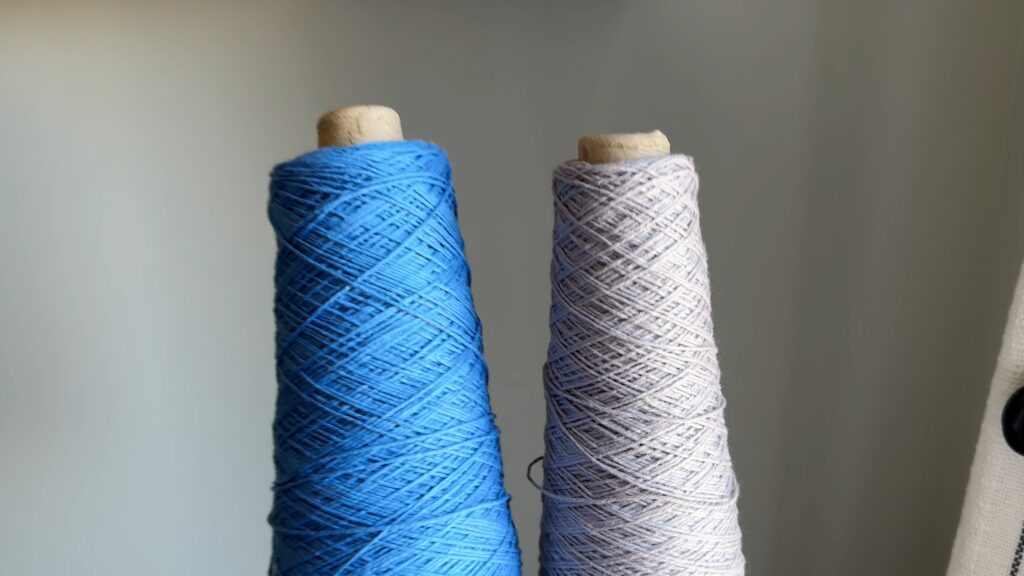
For the Warp, I used 8/4 cotton from Hobbii. I used them in two colors:
-Light gray: Ash (07)
-Light blue: Cornflower (17)
Here’s where you can get the same yarn: https://bit.ly/Hobbii_8-4_cotton_cones
I have had those cones for some time and this is my third project using them. The best part is that there are still quite a lot of yarn left on them. It’s safe to say that there’s enough yarn on two cones to complete this whole project… and others!
The Weft Yarns
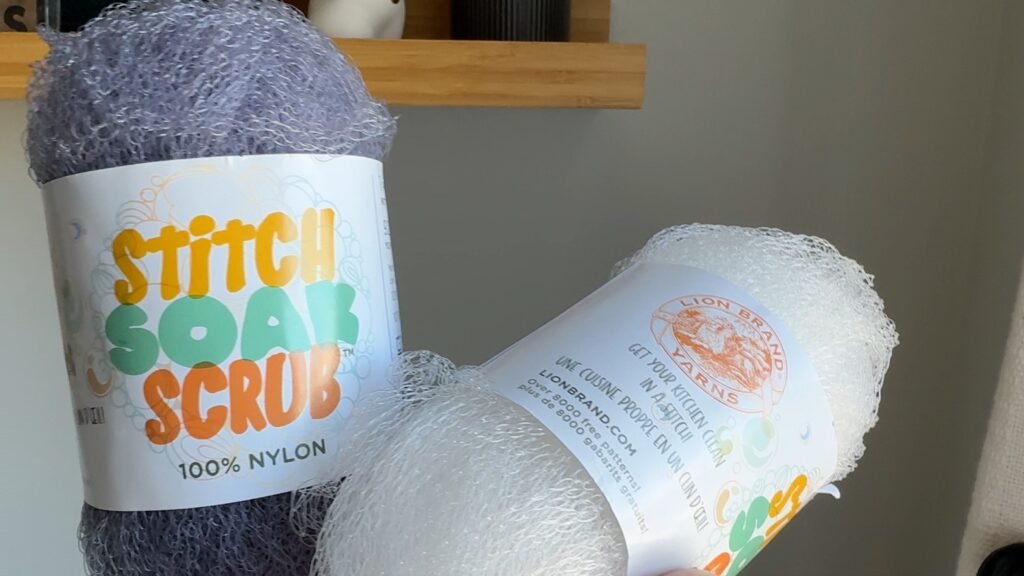
For the weft, I used Lion Brand’S Stitch Soak Scrub 100% Nylon Yarn. Here’s the link to their website: https://lionbrand.sjv.io/aOgPKb
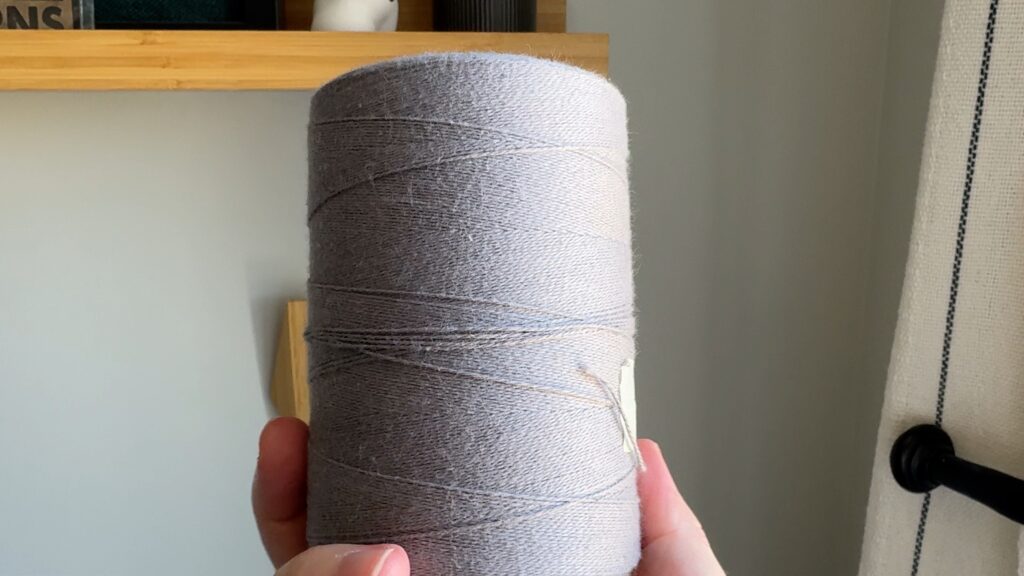
In the weft I also used 8/2 cotton from Maurice Brassard in the color “Gris Foncé-271”.
If you are in the US, they are available through The Woolery’s website : https://woolery.com/maurice-brassard-cotton-yarn-8-2.html?aff=214
For Canada, it’s available at Tisse et File. Here’s the link: https://www.tisseetfile.com/en/collections/coton/products/coton-fil-tissage-2-8?ref=MYLENALAROCHELLE
The Loom
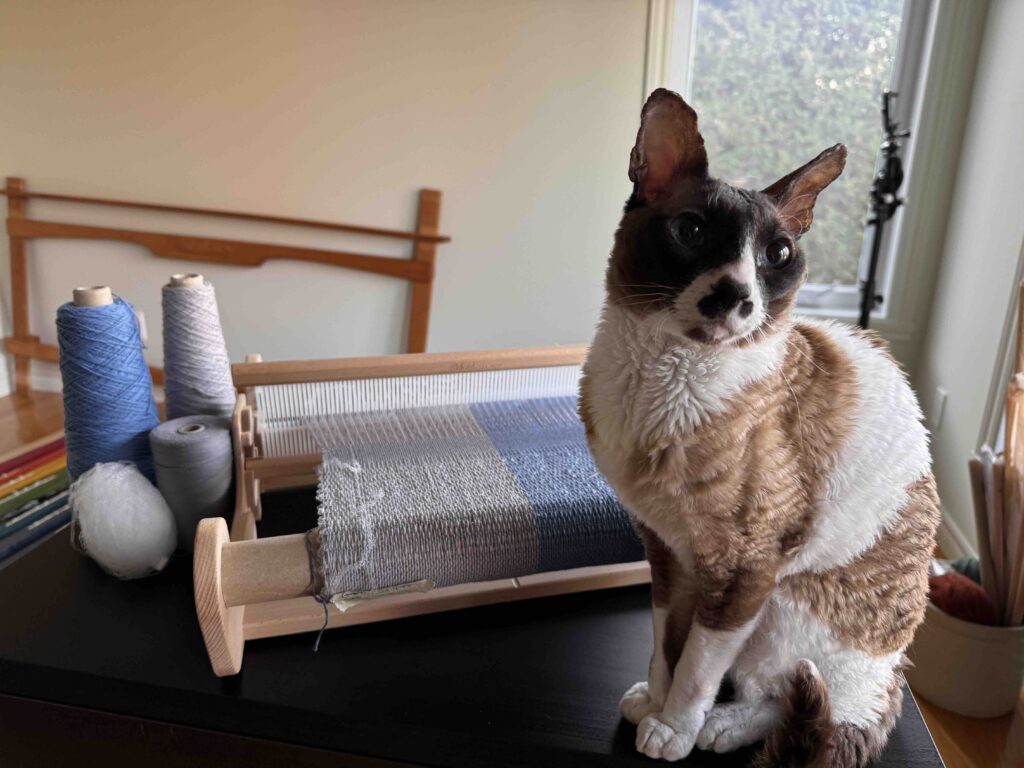
For this project, I used my 16″ SampleIt loom from Ashford. I’m weaving rags that are quite narrow, so I didn’t need to use my big 32″ loom. However, it would have still been possible to weave that project on it.
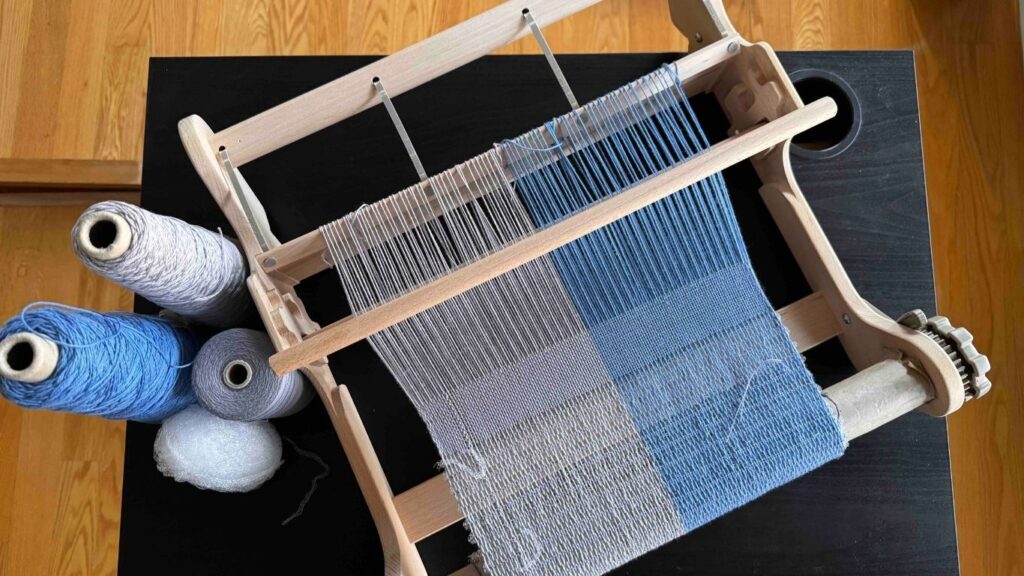
If you are in the US and looking for the same loom, The Woolery has it! Here’s their website: https://woolery.com/ashford-sampleit-loom-16.html?aff=214
For Canada, it’s available at Tisse et File. Here’s the link (In my video, I have the 16”): https://www.tisseetfile.com/en/collections/metier-sample-it-ashford/products/metiers-a-tisser-sample-it-ashford?ref=MYLENALAROCHELLE
The Heddle
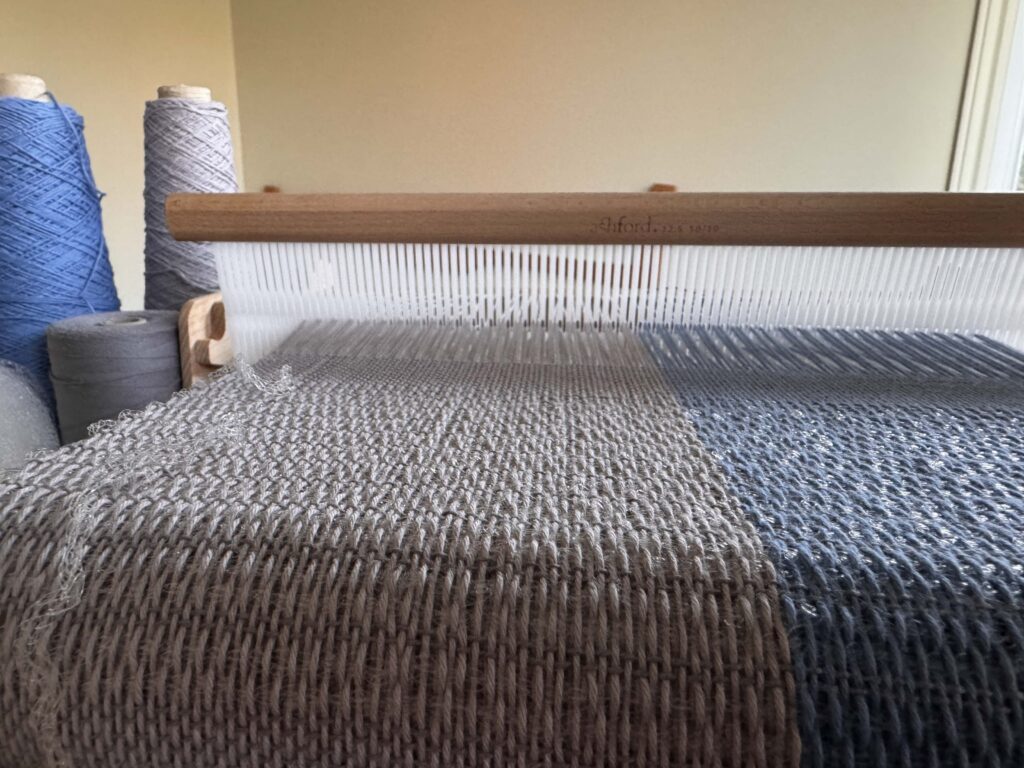
I used my 12.5 DPI heddle for this project. Also, I singled the warp in the heddle.
If you are looking to buy extra heddles and are in the US, the Woolery has them all! You can access their shop through this link: https://woolery.com/weaving/reeds-heddles-raddles/rigid-heddles.html?aff=214
For Canada, it’s available at Tisse et File. Here’s the link: https://www.tisseetfile.com/en/products/peignes-en-nylon-pour-metier-a-tisser-ashford-rigid-heddle?ref=MYLENALAROCHELLE
The Pattern
The Warp Pattern
The warp pattern for this project couldn’t be simpler. I warped 6″ (15cm) of gray followed by 6″ (15cm) of cornflower blue. The warp is single in the heddle, which creates a clean, symmetrical look on the loom. I love how balanced it feels and since these are just rags, I didn’t want to overcomplicate the design!
I warped a total length of 90″ (225cm) with a width of 12″ (30cm). This setup should yield about five rags of 14″ each, with a bit of extra room for waste yarn.
Using my 12.5 DPI heddle, the project came to a total of 150 ends.
Sampling and Testing
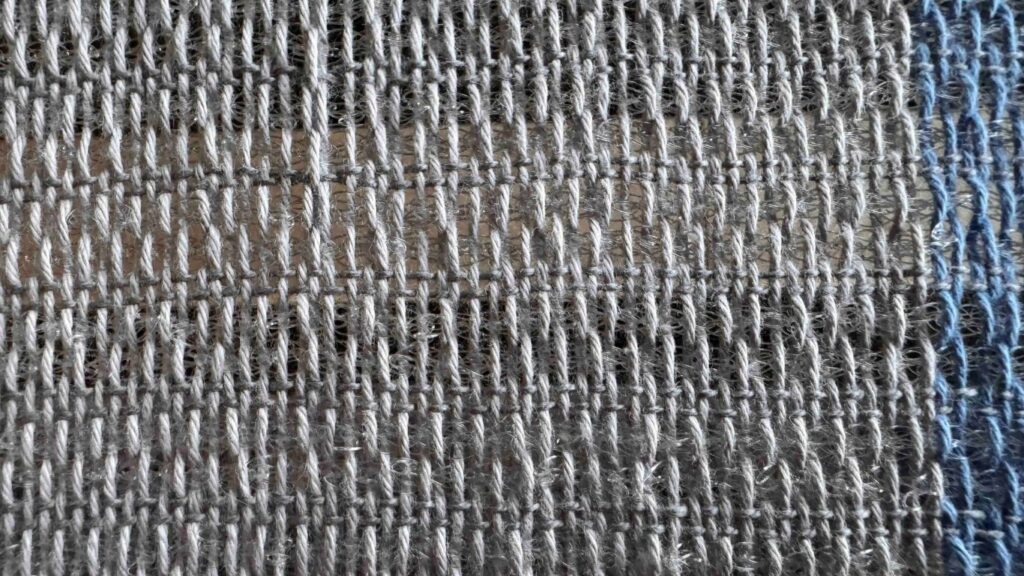
This nylon yarn from Lion Brand is quite unique. It is not braided, but made of many small loops that form a single, spongy strand. I had used something similar before with decent results, but I wanted to see if this improved texture could make even better dish scrubbing cloths.
At first, the yarn did not behave like my usual cotton. The fabric warped unevenly, and I worried that the final piece would not hold its shape. So I decided to mix in some 8/2 cotton picks as stabilizers. My goal was to find a combination that preserved the nylon’s scrubbing ability while improving structure.
Testing the Yarn
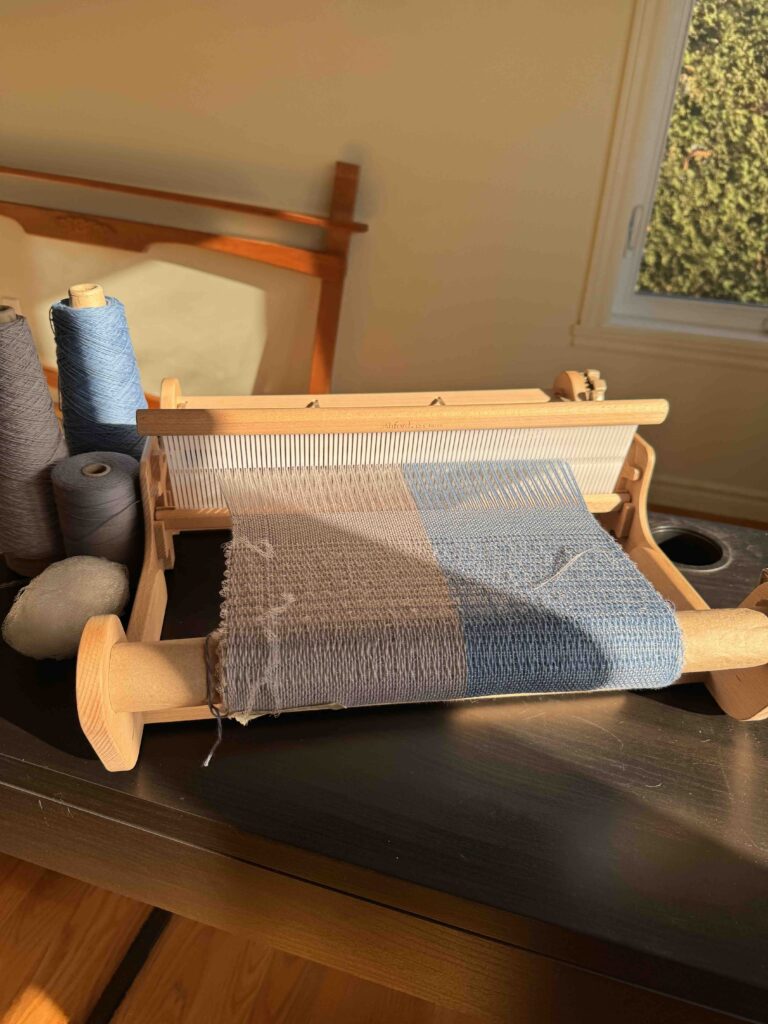
After weaving several test sections, alternating nylon and cotton in different ratios, I wet finished the sample and reviewed the results.
- No cotton: too uneven
- Two picks of cotton and one pick of nylon: good structure, tricky selvedges
- Two picks of cotton and two picks of nylon: the perfect balance with great texture, easy edges, and a subtle ribbing effect that feels ideal for scrubbing. And this became the winning option!
The Weft Pattern
Thanks to my sample, I was confident in the weaving of my rags! Here’s the simple pattern that I followed
-1,5″ (4cm) with 8/2 cotton (this header section will then be sewn into a hem
-Alterning 2 picks of nylon and 2 picks of 8/2 cotton for 11″ (28cm)
-1,5″ (4cm) with 8/2 cotton (this header section will then be sewn into a hem
For a total of 14″ (36cm) per rag.
Finishing Touches and First Impressions
After hemming and washing, the nylon ends that were sticking out unraveled slightly, but the woven sections held up beautifully. I immediately put them to the test cleaning up after making a homemade pot pie, and they performed perfectly.
Conclusion
Even though this project was just rags, it reminded me that every weaving session is a chance to experiment, learn, and create something truly useful. Sometimes, a simple test can lead to your favorite everyday fabric.